
Have a question? Contact us
Fill out the form and we will provide an answer or consultation as soon as possible.
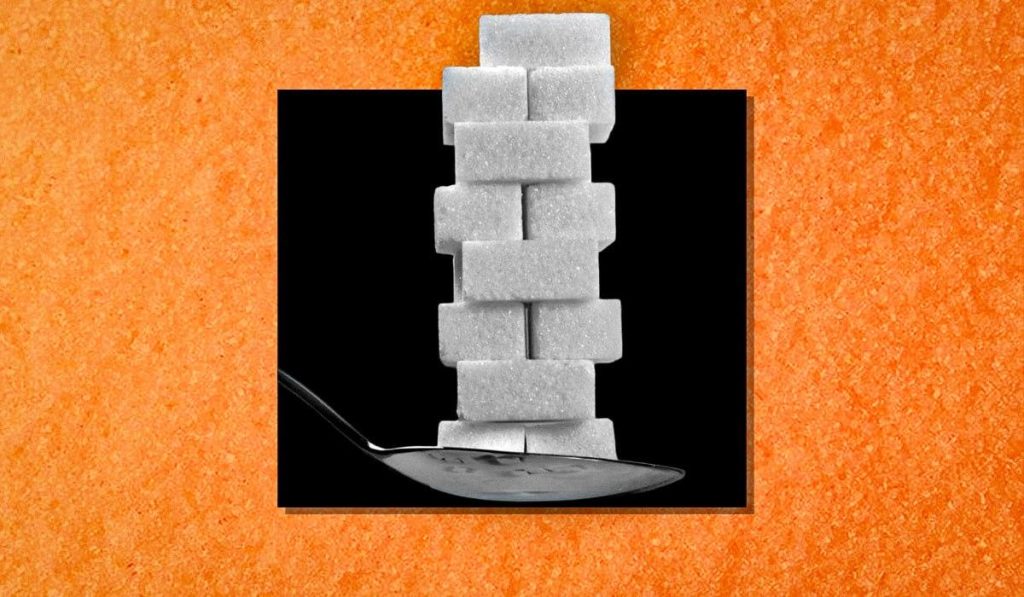
The head of the Ukrtsukor Association spoke about expectations for the harvest, current and projected exports, and price prospects.
Last year, Ukraine harvested a record sugar beet crop. However, the cost of producing sugar continues to rise steadily, including due to the fuel crisis. At the same time, sugar overproduction — both in Ukraine and globally — is putting pressure on prices. As a result, Ukrainian sugar producers say they have been forced to operate at a loss for several seasons in a row.
Meanwhile, in 2026, a significant decline in sugar production is forecast globally, and particularly in Europe, due to climatic factors. Could this become a window of opportunity for Ukraine? What will happen to this year’s sugar beet harvest, what export routes are currently available, and why “sugar prices in stores should rise”? Yana Kavushevska, head of the National Association of Sugar Producers of Ukraine “Ukrtsukor,” discussed these issues in a comment to UNIAN.
How has the weather affected sugar beet yields, and what will the overall harvest be like in Ukraine this year?
It is still too early to say what the harvest will be like, because the harvesting campaign is still some time away. It will start approximately two weeks later this year due to weather-related difficulties, including frosts during the sowing period. Accordingly, a lot can still change.
August is an important month for sugar beet. But one thing is already clear: we will not be able to repeat the results of the previous season. Last season, we had a record sugar beet harvest for Ukraine. This year, we already understand that this will not be repeated.
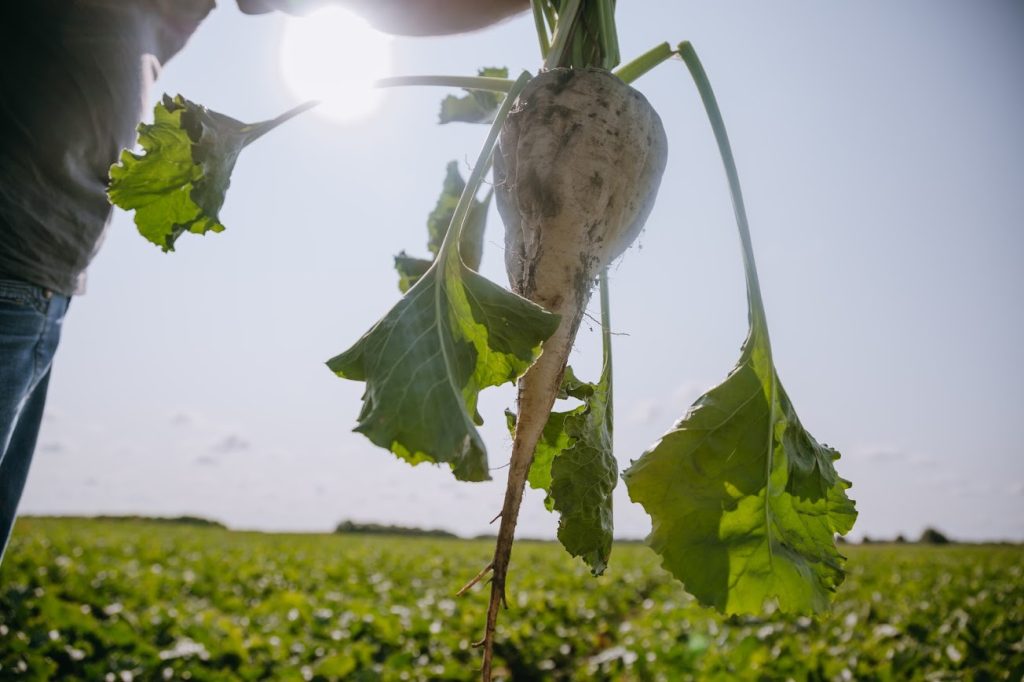
As for the reduction in sugar beet acreage, according to our information, 162,000 hectares were sown with sugar beet. By August, the area had fallen to 159,000 hectares, meaning that 3,000 hectares were lost due to bad weather. Some fields were washed out, others were affected by strong winds, and so on.
The condition of the sugar beet crop is not the best. However, August can still change a lot.
So, is the quality not particularly good?
Yes, in terms of both quality and yield, we will not achieve record levels. Accordingly, our previous production forecast was 1.2 million tonnes of sugar. However, I think it will be revised downward by 100,000–200,000 tonnes.
There are forecasts of a sugar deficit worldwide in the first half of next year, particularly in Europe. Will this create additional opportunities for Ukrainian exports?
We would very much like such opportunities to emerge, but for now we have only a 100,000-tonne quota for the European Union, and we are counting on that. If additional opportunities arise, we will only be happy.
Given the current situation at the ports, the European market is becoming particularly important for us. The markets of the Western Balkan countries, which are not members of the European Union and to which we can transport products by land, are also important.
How much will the blockade of the ports affect exports? Can we only transport sugar by rail?
Yes, of course. We can now look at the results for 11 months of the 2025/26 marketing year. Our sugar marketing year ends on September 1, and a new one begins. After 11 months, the European Union is our largest market. Around 19% of all sugar was shipped to all 27 EU countries.
Uzbekistan and Lebanon are in second and third place, with only a small difference between them. Syria is fourth. These are markets to which we transport sugar by sea. Accordingly, these destinations will be closed to us.
For us, only overland logistics remain. Rail transport for sugar — for example, to Constanța and then onward by container — is currently too expensive.
Overall, the situation with sugar beets in the European Union is difficult, and a decline in production is already being forecast. Of course, this could affect prices. But that is only Europe. We will see how it affects global prices overall, because the global market operates according to somewhat different rules. Brazil, India and Thailand determine market trends there. Although Brazil and India are also currently in an unfavorable situation due to El Niño.
If global market prices allow Ukrainian sugar to remain competitive despite the high logistics costs through Constanța, we may return to our traditional markets, which I mentioned earlier.
Are there any estimates of how much more expensive it is to export one tonne of sugar through Constanța?
Preliminarily, around $50 per tonne. But if we see a sugar price of $400 per tonne on the exchange, that is quite significant. For now, we can ship sugar, and we are doing so. But we do not know whether we will even be able to transport sugar to Constanța.
Taking into account our forecast of 1.2 million tonnes of sugar production and the potential loss of 100,000–200,000 tonnes, we calculate the balance as follows. Domestic consumption is 800,000–900,000 tonnes. Accordingly, there is not much left for export: 100,000 tonnes for Europe, plus another 200,000 tonnes that we may be able to export elsewhere.
There will, of course, be carryover stocks, but they will be needed next year. And carryover stocks will not be significant enough to put pressure on the market. They should be comparable to last year’s level.
We do not have the large surplus we had, for example, over the last two seasons, when we produced twice as much sugar as we consumed and urgently needed to find markets for it.
This year, we are moving toward a balanced market. Domestic consumption plus exports to the European Union and Balkan markets should more or less allow us to pass through the season calmly without a sugar surplus that would put pressure on the market.
But this raises an interesting question. If, for example, Europe needs more Ukrainian sugar and producers want to increase supplies, could less sugar remain for domestic consumption in Ukraine? Or is that impossible?
We understand that Europe is unlikely to say, “Let’s bring us 500,000 tonnes.” Even if our quota were doubled, that would already be excellent. But with a doubled quota of 200,000 tonnes, we could easily supply the market without causing any harm to Ukraine’s domestic market.
We are looking at the situation pragmatically. There will be enough sugar to meet domestic needs, plus 200,000–300,000 tonnes for export. It will go wherever the best price is. Most likely, the best price will be in Europe.
But could the price for final consumers in Ukraine increase, especially given the rising costs for producers due to the fuel crisis?
We hope so, because if prices do not rise, we will simply lose the sugar industry. If you look at the price dynamics of any food product, you will be surprised. Sugar is the only commodity whose price has fallen over the past two years. Today, the wholesale price of sugar is UAH 22.60 per kilogram.
For the last two years, we have been producing a lot of sugar and have not been able to sell it quickly enough.
Was there also global overproduction?
There was overproduction worldwide as well, and accordingly, overproduction in Ukraine put pressure on the market. Now we have a sugar price that is comparable to the level seen in 2022.
But the price should increase. Fuel, labor and other costs have become more expensive. So much has changed in our lives over the past five years.
If the price does not rise, no one will sow sugar beet. Producing at a loss for a third consecutive season is something that even the strongest producers will hardly be able to afford.
So, to reach the break-even level, by how much does the price need to increase? By 20% or 30%?
For Ukrainian producers to operate with at least a minimum level of profitability, the price needs to reach UAH 32–35 per kilogram, while the cost of production will be around UAH 30 per kilogram.
We do not know how much diesel fuel will cost, which we will now use to transport sugar beets. I speak to producers regularly — they are essentially updating their budgets every week because the situation is changing dynamically.
Is the production cost of UAH 30 per kilogram already taking into account the higher diesel prices?
Yes.
Finally, one more question about the results of the marketing year, which ends this month. In April, UCAB forecast that Ukraine’s sugar exports would decline by 20%, to 500,000 tonnes. What figures can we talk about now?
UCAB was pessimistic. As of today — August 7 — we have already exported 622,000 tonnes of sugar. This is already higher than last year, when we exported around 580,000 tonnes. If the ports had not been closed, the result would have been even better, because there is demand.
This is how circumstances have developed that Central Asia is interested in Ukrainian sugar. And Uzbekistan has really taken off over the past six months — it has become our main buyer.
A year ago, I said that Ukraine had lost its markets in Central Asia and that returning there would be practically impossible because logistics were extremely difficult and expensive. But then the Hormuz situation occurred. Sugar from the UAE could not reach its customers in Uzbekistan, Tajikistan and elsewhere, so these countries began looking for alternatives. And Ukrainian sugar found its buyer and returned to its traditional market.
https://www.unian.ua/economics/agro/cukor-v-ukrajini-mozhe-podorozhchati-yakoyu-maye-buti-cina-dlya-virobnikiv-13466130.html

Fill out the form and we will provide an answer or consultation as soon as possible.