
Have a question? Contact us
Fill out the form and we will provide an answer or consultation as soon as possible.
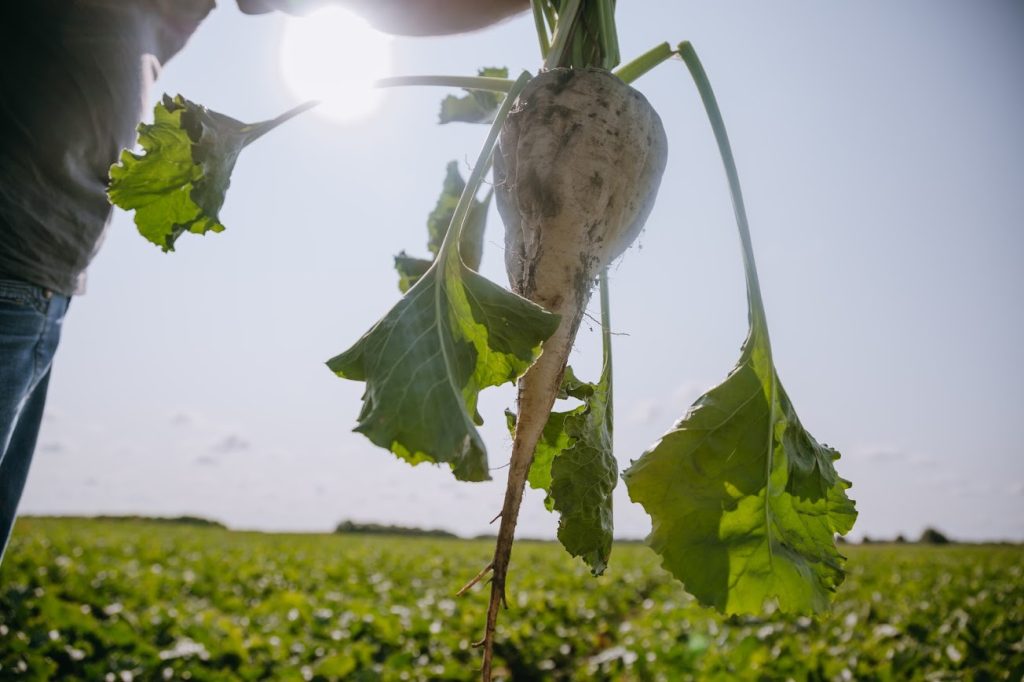
The heatwave sweeping across Europe has already created serious risks for the sugar beet crop. Industry associations warn that the coming weeks may prove decisive for this year’s harvest. In Ukraine, the situation is also becoming increasingly concerning, particularly in the country’s western regions, which traditionally account for the largest share of sugar beet production.
“In my 15 years with the company, I have never seen a drought like this,” says Dmytro Kostariev, Chief Agronomist at Zakhidnyi Buh.
Western Ukraine has now been suffering from a rainfall deficit for the fourth consecutive month. According to Kostariev, northern districts of the Lviv region have received only 70–80 mm of precipitation since the beginning of the season—barely more than a single month’s normal rainfall. In the company’s other operating regions, cumulative rainfall amounts to just 110–120 mm, roughly half the usual level.
“Even when we experienced dry spells lasting a month or six weeks in previous years, subsequent rains would usually compensate for the moisture deficit,” Kostariev explains.
What does this mean for sugar beet crops? How could the current heatwave and lack of moisture affect not only yields but also sugar factory operations? We asked Ukraine’s three largest sugar beet producers — Astarta, Zakhidnyi Buh, and Ukrprominvest-Agro.
Every Day of Heat Reduces Yield Potential
According to Oleksandr Havrish, Director of the Sugar Business at Ukrprominvest-Agro, the situation unfolding across Europe should serve as a serious warning for Ukraine as well.
“The European scenario we have all been watching is a serious warning for Ukraine. We are not yet talking about irreversible crop losses, but the risk that yield potential will have to be significantly revised downward can no longer be ignored.”
He explains that sugar beet is currently passing through one of its most critical growth stages, actively building root mass while developing its leaf canopy. During this period, the crop requires adequate soil moisture and moderate temperatures.
Prolonged heat slows crop development. Instead of growing, the beet shifts into survival mode, reducing its growth rate and losing valuable time needed to accumulate root mass. Although plants may appear healthy and recover their turgor overnight, the lost growing time cannot be regained.
Following heat stress, sugar beet can partially recover, but only to a limited extent. If high temperatures and moisture shortages persist, yield losses may become irreversible, Havrish warns.
Astarta shares the same assessment. The company notes that July and the first half of August represent the most important period of sugar beet vegetation, when 70–80% of the future root mass is formed. Consequently, any stress during this period has a critical impact on final yields.
Kostariev adds that the risks extend well beyond several weeks of summer heat. According to him, the critical period lasts throughout the crop’s active growth stage—from canopy closure until physiological maturity in late September or early October—roughly 100–120 days.
“Our calculations show that once the crop reaches its basic physiological yield potential, every single day of stress reduces potential yield by approximately 1%.”
What Is Happening in the Fields?
This year, the condition of sugar beet fields at Zakhidnyi Buh varies considerably depending on soil moisture and soil quality.
The healthiest crops are growing on more fertile soils, while carbonate and lighter loamy soils have suffered the greatest damage from the lack of rainfall.
This season, the company is cultivating 15,700 hectares of sugar beet.
Approximately 1,000 hectares are already considered to be in critical condition. Plant populations there have fallen to 60,000–70,000 plants per hectare, and crop development has slowed significantly.
Another 3,000–3,500 hectares are classified as problematic. Although row closure has already occurred, June’s heat and lack of rainfall have caused plants to begin losing leaves. Around 6,000 hectares remain in satisfactory condition. The crop is experiencing stress, but no critical physiological damage has yet been observed. The remaining one-third of the acreage appears visually healthy, with plants developing largely in line with expectations.
According to Kostariev, the most difficult situation is in northern and northeastern parts of the Lviv region—particularly the Sheptytskyi and Zolochiv districts—where rainfall deficits have been most severe. Conditions are noticeably better in the eastern and southeastern parts of the region, as well as in the Ternopil and Chernivtsi regions.
“If we look only at plant population, for example in northern Lviv region, the figures do not yet appear critical. We currently have an average of 88,000–92,000 plants per hectare, compared with more than 95,000 in previous years. The real problem is that the crop has become extremely uneven. Sugar beet plants are at different stages of development, sometimes even within the same field.”
Conditions Differ Across Regions
The situation in Astarta’s fields also varies between its western and eastern production clusters.
In the Vinnytsia, Khmelnytskyi and Ternopil regions, despite spring frosts and dust storms that caused localized plant losses, the company has generally managed to maintain optimal plant populations.
Soil moisture reserves remain sufficient. The leaf canopy is developing normally, and row closure is progressing actively. So far, the impact of the heat has been moderate and relatively short-lived.
In the Poltava region, however, although most fields remain in satisfactory condition, crop development is uneven due to spring frosts, dust storms and localized reseeding following damage caused by the sugar beet weevil.
“Moisture availability has now become critical. Water reserves in the upper soil layer have been depleted, and plants are relying on deeper moisture reserves. Leaf canopy development has slowed, row closure is uneven, and the effects of heat are becoming increasingly evident, with daytime wilting and stalled growth already limiting future yield potential,” the company says.
Ukrprominvest-Agro also reports a gradual deterioration in crop conditions as the heat persists.
According to Oleksandr Havrish, sugar beet fields in the Vinnytsia region and at partner farms in the Cherkasy region remain under control for now, but the situation is worsening rapidly.
“Across a significant share of our acreage, sugar beet has already developed a full leaf canopy and entered the active root growth stage. However, high temperatures combined with uneven moisture availability are beginning to significantly limit the crop’s potential.”
In some fields, excessive heat causes leaves to wilt during the day, slowing plant growth and creating increasingly uneven crop development. The greatest problems are observed where soils are compacted, moisture is insufficient, or plants have weaker root systems.
An Unusually Challenging Season
According to Havrish, this season has been exceptionally difficult from the very beginning.
Against the backdrop of reduced sugar beet acreage, planting was carried out under unstable and often unfavourable weather conditions. As a result, emergence was uneven, plant development varied considerably, and root systems were weaker than usual.
In practice, part of this year’s crop entered the summer heat already weakened and highly heterogeneous. The spring stresses have now been compounded by prolonged high temperatures, rapid moisture evaporation and uneven rainfall distribution.
“We can no longer describe this as a typical weather-related challenge. The risk of lower yields is very real. Every additional week without effective rainfall will further reduce root weight and overall sugar production per hectare.”
The Main Risks to the Crop
The greatest threat this season is insufficient root development.
According to Havrish, under prolonged drought and high temperatures sugar beet may maintain its leaf canopy while virtually stopping root growth.
Another major concern is uneven crop development. Weaker plants and areas suffering the greatest moisture shortages may fail to produce a full crop, reducing not only average yields but also harvesting efficiency and timing.
Sugar content presents another challenge.
Although drought conditions may result in relatively high sugar concentrations, this does not compensate for the loss of root mass.
“For both growers and sugar factories, what ultimately matters is not simply the percentage of sugar content, but the actual sugar yield per hectare.”
Once rainfall returns, plants may begin producing new leaves rapidly, using sugars already stored in the roots to fuel that regrowth.
Disease pressure also becomes a concern as weather conditions change.
According to Dmytro Kostariev, the current heat is suppressing fungal diseases. However, once rainfall resumes, drought-stressed plants will become considerably more susceptible to infection.
“Any kind of stress reduces the crop’s natural resistance. Damaged leaves collapse onto the soil surface, creating additional sources of infection. At present we are mainly observing physiological damage rather than fungal diseases. But once temperatures fall and rainfall returns, damaged plants will become much more vulnerable.”
The company has already completed its first fungicide application and plans a second treatment in the near future.
Astarta shares similar concerns. The company expects yields to decline primarily because root crops are not accumulating sufficient biomass. However, the principal risks differ by region.
In western Ukraine, the greatest threats are fungal diseases together with potential hailstorms and strong winds.
In the Poltava region, the primary risks are heat stress, halted root growth, premature senescence of lower leaves and possible outbreaks of Cercospora leaf spot once weather conditions become more favourable for disease development.
Later Processing Campaign and Lower Sugar Production
According to Havrish, the combination of several negative factors—including reduced sugar beet acreage, difficult planting conditions, drought and prolonged heat—is already affecting not only crop development but also the outlook for sugar factories.
If weather conditions do not improve soon, the consequences will extend across the entire industry.
Lower beet yields would mean less raw material for processing, a shorter processing campaign and reduced sugar production.
“Under such a scenario, the balance between sugar supply and demand could become considerably tighter than anticipated at the beginning of the season. The current situation should therefore be viewed not merely as an agronomic challenge, but as a factor capable of influencing the entire sugar market.”
Dmytro Kostariev also expects this year’s beet processing campaign to start later than usual.
“Every year, the Radekhiv Sugar Group tries to give the crop a few additional days to gain root weight before factories begin processing. Given the current weather conditions, we are likely to delay the start of the campaign this year as well.”
He estimates that the processing season could begin five to seven days later than usual.
Astarta is considering a similar approach.
The company does not rule out postponing the launch of some factories in eastern Ukraine by one to two weeks to allow sugar beet more time to accumulate biomass. In western Ukraine, however, factories are expected to operate according to their normal schedule.
The company also anticipates lower overall production due to reduced planted area and adverse weather conditions, although it does not currently expect any significant deterioration in beet quality.


Fill out the form and we will provide an answer or consultation as soon as possible.