
Have a question? Contact us
Fill out the form and we will provide an answer or consultation as soon as possible.
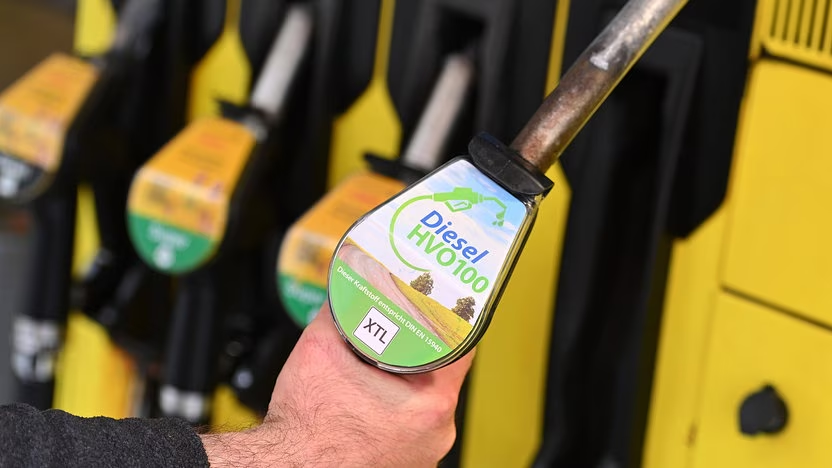
Germany is the largest producer of biodiesel in Europe. According to the latest data from the Verband der Deutschen Biokraftstoffindustrie (VDB, Association of the German Biofuels Industry), total biodiesel production in Germany reached around 3.6 million tonnes in the calendar year 2024, representing year-on-year increase of 100,000 tonnes.
More than half of this production was based on rapeseed as a feedstock, with rapeseed oil-based biodiesel accounting for around 53.1 per cent of total output in 2024. Used cooking oils and fats ranked second, accounting for 24.1 per cent, followed by soybean oil at 15.0 per cent.
Animal fats, which have only counted as feedstock in German biofuel production since 2021, made up 2 per cent of production. In contrast, palm oil is no longer used in German biodiesel production and fuel applications, because biodiesel and HVO made from this tropical oil have not been credited towards meeting greenhouse gas reduction targets since 2023.
The Union zur Förderung von Oel- und Proteinpflanzen e. V. (UFOP) has stated that approximately 1.45 million tonnes of rapeseed oil were processed into biodiesel in Germany in 2024, adding that this volume is roughly equivalent to the year’s rapeseed harvest. This means that the German biodiesel industry is the primary market for domestically grown rapeseed. Accordingly, demand for rapeseed oil to produce fuel also yields approximately 2.2 million tonnes of rapeseed meal, which is currently by far the most important GM-free protein source in dairy cattle feeding.
This value chain is a perfect example of an integrated bioeconomy with market potential, because in future rapeseed oil and methyl ester respectively may play a greater role in the so-called molecular transformation within the chemical industry. The UFOP has urged that this transformation be reflected and funded under the national and EU bioeconomy strategies, emphasising that the corresponding harvest is basically also available to the food market as a “reserve” at any time.
Fill out the form and we will provide an answer or consultation as soon as possible.