
Have a question? Contact us
Fill out the form and we will provide an answer or consultation as soon as possible.
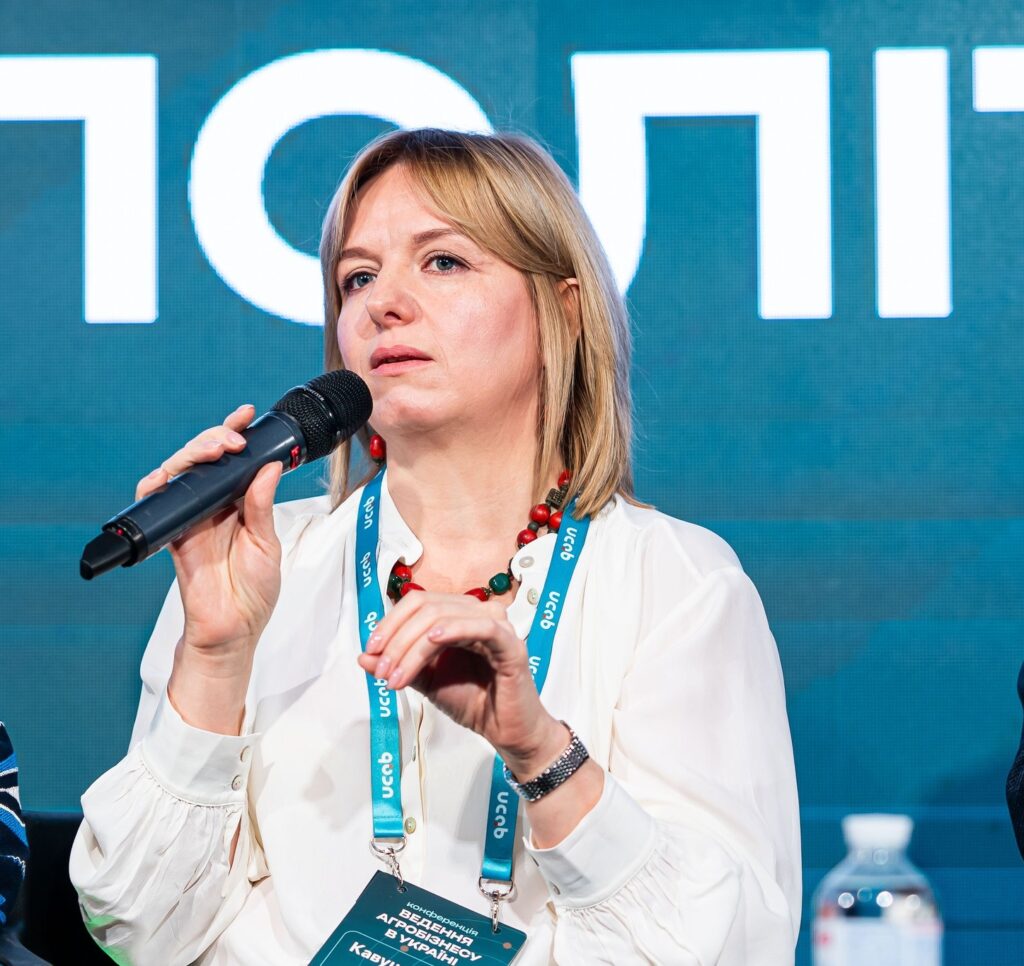
On the results of the 2025 season and expectations for the current year of Ukraine’s sugar industry, the “Interfax-Ukraine” agency speaks with the Head of the National Association of Sugar Producers (“Ukrtsukor” / “Ukrsugar”), Yana Kavushevska
Author: Oksana Ruzhenkova
– How many hectares of sugar beet were sown in 2025, what was their yield, and what was the total production? Could you compare these figures with 2024?
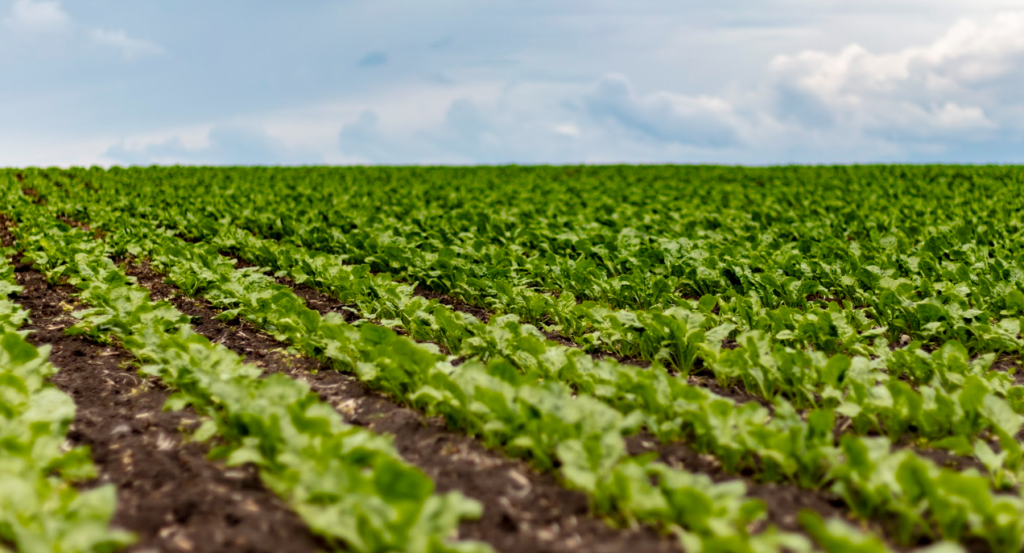
– In 2025, 199 thousand hectares of sugar beet were sown in Ukraine. At the beginning of the year, we had slightly higher expectations: “Ukrtsukor” was targeting 220 thousand hectares, the Ministry of Agrarian Policy named 260 thousand hectares, but in the end, we reached a consensus of 199 thousand hectares. The sugar beet harvest concluded just a few days ago. This may sound somewhat unusual considering the scene outside your window, but unfortunately, the weather dictated it this way this year.
According to our data, the average yield was 58 tons per hectare. This differs slightly from the Ministry of Economy figures (56 t/ha), but we rely on data received from sugar companies, particularly regarding the amount of processed raw material. Last year, official statistics also showed 50 t/ha, while industry data indicated 55 t/ha. However, good weather during the 2025 growing season allowed for a higher yield.
According to industry estimates, sugar factories have already processed 10.8 million tons of sugar beet, but deliveries are still ongoing.
It’s worth noting that the Horokhiv Sugar Factory is not part of “Ukrtsukor.” It does not provide us with operational information, so we estimate its data or obtain it from open sources. Approximately, in 2025, the enterprise had about 8 thousand hectares of beet fields, which, considering the yield in its region, amounts to over 500 thousand tons of sugar beet for processing.
Thus, for Ukraine as a whole, we estimate total production at around 11.4 million tons of sugar beet, with an average yield of 58 t/ha.
A total of 27 sugar factories operated during the 2025 season. As of January 10, four factories continue processing. According to our forecasts, the sugar production season will end between January 18–20.
– The dynamics are interesting not so much for the discrepancies between statistical sources, but regarding the quotas the European Union planned to implement in 2025. Did major players manage to adjust their production plans to avoid overproduction?
– The sugar industry in 2025 showed a significant reduction in planted areas. In 2024, sugar beet was sown on 250 thousand hectares, while for the 2025 harvest, about 200 thousand hectares were allocated. This also reflects producers’ expectations of future EU restrictions on Ukrainian sugar, which would require finding new export opportunities.
Undoubtedly, farmers always consider the profitability of alternative crops, which also played a significant role. But EU import restrictions on Ukrainian sugar significantly affected the reduction of sugar beet acreage in Ukraine.
– How much sugar beet is grown by producers for their own needs, and how much is purchased from third parties? Is this ratio stable year to year?
– The ratio changes each year. In 2024–2025, according to our calculations, it was 60/40 in favor of farms within sugar agribusinesses or affiliated with sugar factories. In 2026, I believe this ratio will adjust slightly, and the share of self-grown beet among sugar producers will likely increase.
Clearly, the better the sugar price, the more farmers are interested in growing it. The increase from 181 thousand hectares in 2022 to 253 thousand hectares in 2024 confirms this.
We remember times of low sugar prices when factories survived only due to their own beet-growing zones. Most sugar companies without their own farms had to exit the market or sell assets. Few remember companies like “UPK” or “Euroservice,” which were industry leaders in the early 2000s.
Times have changed. Today, we see examples where sugar companies have built effective partnerships with independent farmers. A clear example is the German-invested “Radehiv Sugar,” which produces over 500 thousand tons of sugar annually without owning land, relying entirely on independent farmers.
Another good example is “Ukrprominvest-Agro.” Despite having its own land bank, it effectively develops partnership programs with independent farms, with nearly half of the sugar beet processed by its factories coming from partner suppliers.
We can say that Ukraine’s sugar industry increasingly resembles the European model: farmers supply raw materials, and sugar factories process them.
– Sugar producers can be cited as examples of working with outsourced farms. Can you explain this cooperation?
– Indeed, the industry demonstrates strong examples of ecosystems where processing enterprises collaborate with beet-growing farms. Sugar beet is a complex crop requiring specialized agronomic knowledge, significant capital investments per hectare, and a delayed payment schedule for produced goods. It also requires specialized, expensive machinery, which not every farmer can afford.
Through partnership programs, sugar companies offer assistance: funds for seeds and agrochemicals, agronomic support, joint cultivation plans, field consultations, and help in hiring specialized harvesting machinery. These programs have been effective for years.
– Can you name the top five sugar producers in Ukraine for the 2025 season?
– Certainly. However, factories are still operating, so I can name the leaders, but not always the exact production volume. The top three are stable: Radehiv Sugar (produced 535 thousand tons, one factory still operating), “Astarta” (362 thousand tons), and “Ukrprominvest-Agro” (as of January 10 – 242 thousand tons, factories still operating). Fourth is Teofipol Sugar Factory (100 thousand tons), and fifth is A’SPIK Group (94 thousand tons).
– How much sugar will be sold domestically, and how much exported? To where and why?
– We hope domestic consumption in 2026 remains at least 900 thousand tons, similar to last year. This goes to industrial processing, households, etc. Anything beyond this should be exported.
Our expectations are that sugar production in 2025–2026 marketing year will exceed 1.7 million tons. As of January 10, association member factories produced 1.615 million tons. Hence, at least 700 thousand tons should go to export.
Ukrainian sugar producers follow marketing years from September 1 to August 31, European colleagues from October 1 to September 30, but we’re talking at the start of the calendar year, so we summarize the previous calendar year. The EU quota is based on the calendar year.
In 2025, Ukraine exported 464 thousand tons of sugar, 27% to the EU, the rest globally. In 2024, the ratio was 60/40. Unfortunately, 464 thousand tons is 38% less than the previous year, when Ukraine exported a record 746 thousand tons.
Key buyers in 2025 included Middle Eastern and Balkan countries. Lebanon led at 71 thousand tons; last year it was Turkey. Second was Bulgaria (66 thousand tons), third North Macedonia (39 thousand tons), fourth Libya (34 thousand tons), fifth Syria and Turkey (over 27 thousand tons each).
For 2026, the export geography likely won’t change – countries with convenient logistics allowing competitive costs. For example, it’s easier and cheaper to deliver sugar from Brazil to Central Africa than from Ukraine. For Lebanon and Libya, Ukraine has a logistics advantage.
Unfortunately, global sugar prices are currently unfavorable, around $420/ton on the London Exchange, a five-year low. The industry is concerned.
Forecasting the future is hard because the world sugar supply is abundant. Prices are too low for producers. Even major players cannot operate at a loss long-term. India plans to increase bioethanol fuel content to 20%, diverting sugarcane from sugar production, which may support domestic prices and limit export supply.
– Who are the end buyers of Ukrainian sugar?
– Mainly European buyers, often confectionery, beverages, or industrial processors. Exports to the Middle East and Africa are handled via regional or global traders, who resell to local networks or processors. Licensing and quotas for EU exports allow Ukrainian producers to participate in tenders for large European food companies, ensuring steady deliveries.
– Are there EU lobbyists supporting increased Ukrainian sugar imports?
– Yes. The European Association of Sugar Processors (CIUS), representing Nestle, Kraft, Ferrero, and others, supports increased Ukrainian sugar quotas to diversify supply sources. They also advocate liberalized sugar imports from Ukraine and MERCOSUR countries.
– What about sugar syrup production?
– Likely refers to “Ukrprominvest-Agro.” This is not a final product but an alternative production scheme, storing sugar as syrup until convenient for crystallization.
– How often are sugar factories modernized? Were there any in 2025?
– Modernization is ongoing. In the 1990s, Ukraine had 192 factories; now 27 operate. Modernization focuses on energy efficiency, sugar quality, and logistics, including EU-standard 25 kg packaging and silos.
– Alternative energy?
– Seven of 27 factories produce bioethanol, biogas, or biomethane. The sector has strong potential.
– Top 3 sugar market events of 2025?
Successful exports despite EU restrictions and port challenges.
Introduction of quota distribution and licensing for EU exports.
Increase of quota under the EU Association Agreement from 20 to 100 thousand tons.
– Expectations for 2026?
– Continue dialogue with EU partners for gradual integration, aim to increase quotas by 2028, maintain licensing continuity, and expand the industry ecosystem.
– Benchmarks discussed at a recent agricultural conference?
– Key is competitiveness with European sugar: fuel, water, coal, and other input efficiency. Ukraine currently has a 100-thousand-ton EU counter-quota, not fully utilized due to logistics and conflict.
– Will sugar prices rise for Ukrainian consumers in 2026?
– Hopefully, yes. Extremely low prices reduce sugar beet planting, lead to factory closures, and could limit domestic sugar availability. Currently, sugar sells around 19.8 UAH/kg, below production costs due to low world prices and overproduction. The market is cyclical, currently at a low point. When world prices rise, exports will absorb excess supply.

Fill out the form and we will provide an answer or consultation as soon as possible.